Heavy-duty hydraulic cylinders provide the linear force and motion behind much of the equipment running in a solvent extraction plant, from bag stackers to pressing and lifting systems, all fed by a hydraulic power pack upstream. Rated up to 210 bar with bore sizes from 40mm to 250mm, these cylinders are sized to the specific force and stroke requirements of whichever machine they're mounted on.
What makes a cylinder suited to process plant duty
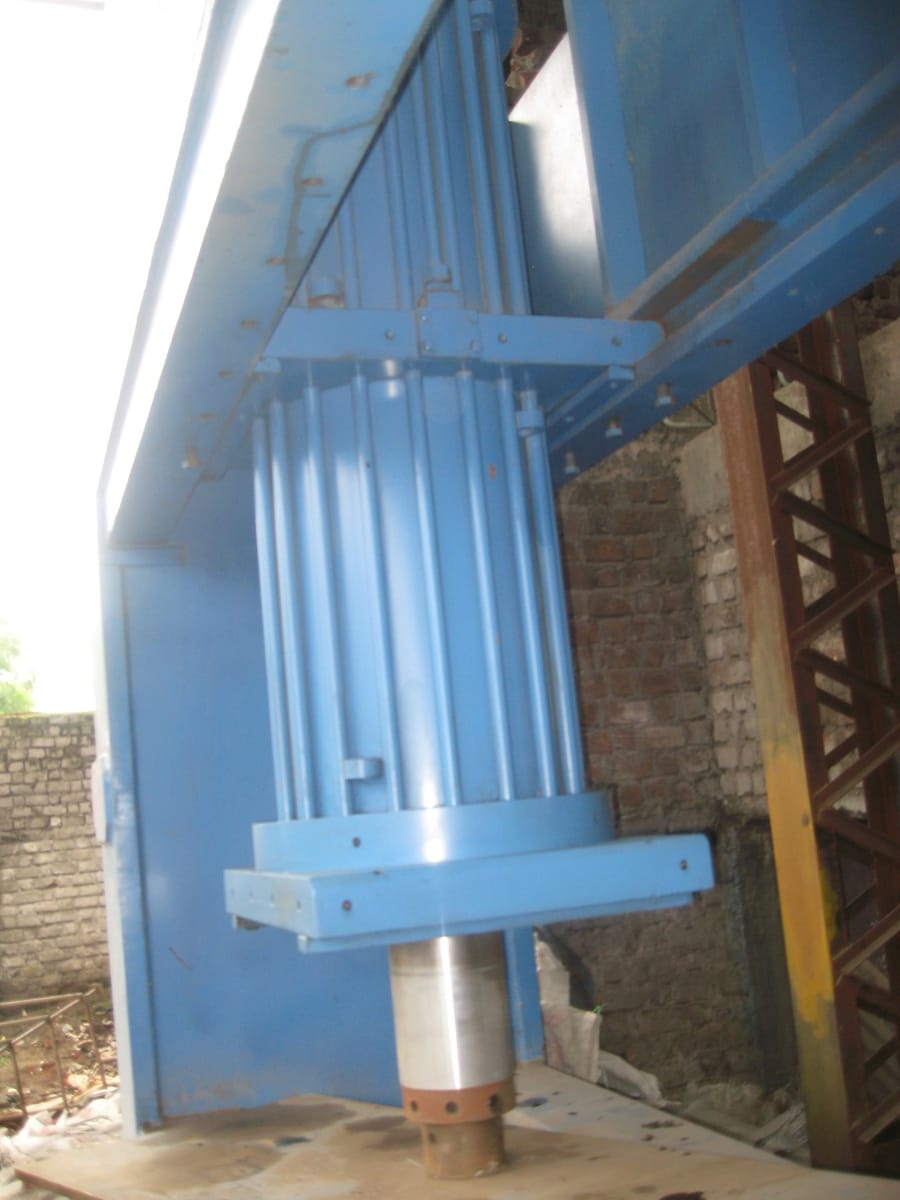
Continuous industrial operation puts different demands on a cylinder than intermittent-use equipment does. Chrome-plated rods resist corrosion and wear from repeated cycling, which matters in plant environments where moisture and process residue are part of daily operation. Precision seals are what keep the cylinder leak-free over years of continuous duty — a failed seal doesn't just lose hydraulic efficiency, it creates a housekeeping and safety issue on the plant floor.
Mounting flexibility
Clevis, flange, trunnion, and other mounting options exist because cylinders get installed in very different mechanical contexts depending on the application — a bag stacker's lifting cylinder mounts differently than a press cylinder or a positioning actuator would. High-grade steel construction throughout the cylinder body is what lets the same underlying design be configured across this range of mounting and application needs without compromising on service life.
Specifications
- Bore sizes: 40mm to 250mm
- Pressure rating: up to 210 bar
- Rod coating: chrome-plated
- Mounting options: clevis, flange, trunnion, and others
- Construction: high-grade steel
Where cylinders show up across the plant
Bag stackers and material handling equipment, pressing and actuation systems, and lifting and positioning equipment are the three broad categories where hydraulic cylinders do the mechanical work in a solvent extraction plant. Because bore size and pressure rating both scale with the load and force required, matching cylinder specification to the actual application — rather than over- or under-sizing — is what keeps both cost and reliability in line with what the machine actually needs.
Sizing considerations that get overlooked
Bore size determines the force a cylinder can generate at a given pressure, but stroke length and cycle frequency matter just as much for service life in continuous-duty applications. A cylinder undersized for its bore relative to the load will run at higher pressure than ideal to hit the required force, accelerating seal wear and shortening service intervals. Cycle frequency matters too — a cylinder specified for occasional actuation won't hold up the same way under the continuous cycling a bag stacker demands during a full shift. Working through actual duty cycle and load requirements with a supplier before finalizing bore size and mounting configuration avoids both the cost of oversizing and the reliability problems that come with undersizing.
Interested in our industrial equipment?
Our engineering team, based in Indore, Madhya Pradesh, India, will recommend the right solution for your plant requirements.
Request a quote