A coil tilter rotates a steel coil between its vertical (eye-up) and horizontal (eye-out) orientation — a step most coils need at least once, whether that's for slitting line feed, end processing, or storage.
Hydraulic vs mechanical coil tilters
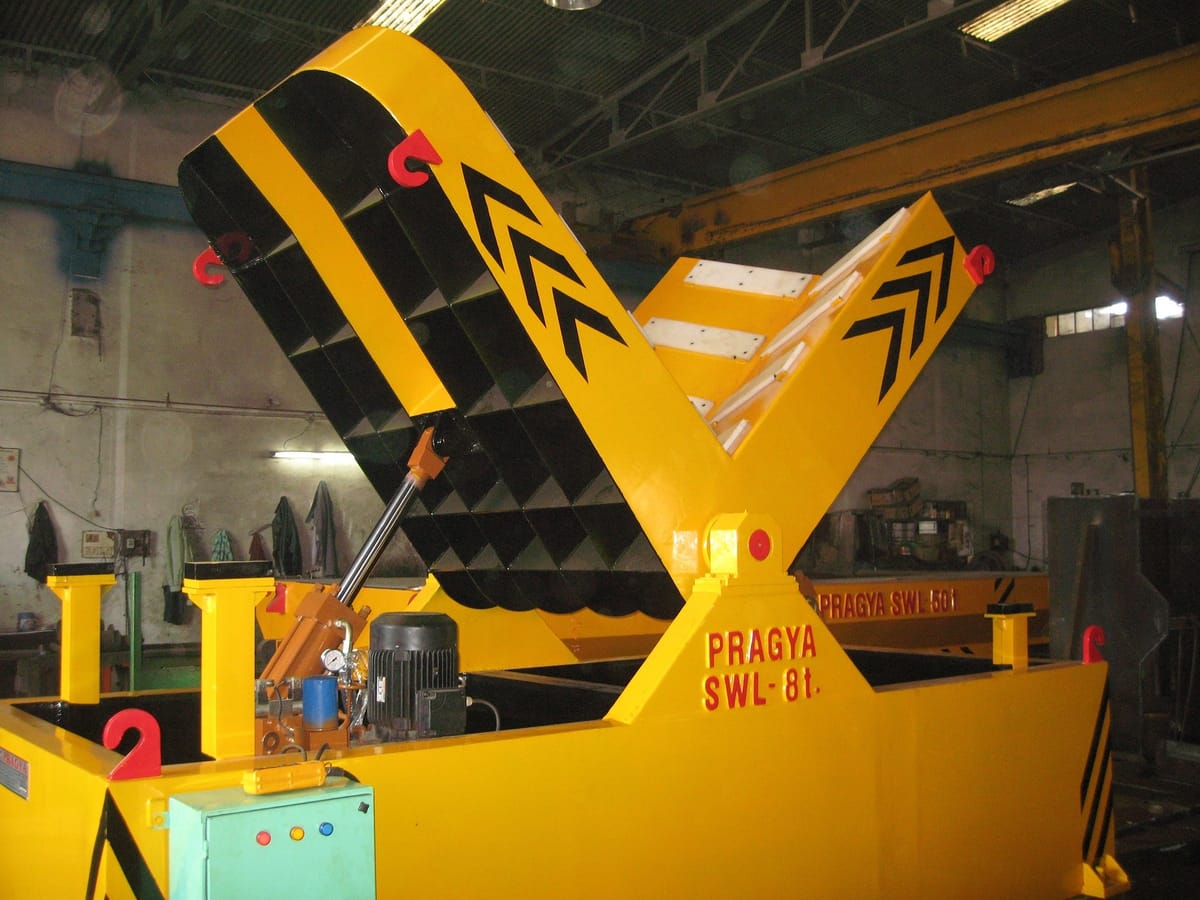
- Hydraulic coil tilter — hydraulic cylinders drive the rotation, giving smooth, precisely controllable movement across the full 0–90° range. This is the better fit when the tilt angle needs to stop and hold partway, or when coil surface protection matters.
- Mechanical coil tilter — a mechanical actuation system handles the same rotation with fewer moving hydraulic parts to maintain, at the cost of some of that fine control.
What to check before buying
- Load capacity: up to 45 ton
- Rotation range: 0–90°
- Control: manual or automated, depending on how the tilter needs to integrate with your line
- Construction: heavy-duty steel
Capacity and rotation range are the obvious numbers, but the detail that actually determines fit is floor space: a low-profile design that keeps the coil close to the ground during rotation matters more in a tight slitting-line layout than it does in an open yard.
Why the tilt itself needs to be controlled
An uncontrolled tilt risks two things: the coil shifting inside its cradle mid-rotation, and abrupt stops that stress both the coil and the tilter's frame. Safety interlocks that prevent operation outside the intended sequence, combined with smooth, precisely positioned rotation, are what actually protect the coil edge and the operator standing nearby — not just the headline tonnage rating.
Where coil tilters fit in the line
Typical placements are ahead of a slitting line (so the coil is presented eye-out for uncoiling), at end-processing stations where the operator needs access to the coil face, and in storage areas where orientation needs to change between receiving and dispatch. If floor space is genuinely the constraint rather than throughput, an overhead-mounted aerial coil tilter — which does the same rotation from a crane instead of the floor — is worth comparing against a floor-mounted unit before you commit to a layout.
Interested in our industrial equipment?
Our engineering team, based in Indore, Madhya Pradesh, India, will recommend the right solution for your plant requirements.
Request a quote