A coil tong lifts a steel coil by clamping its outer diameter between two jaws — the jaws tighten as the load comes on, so the grip gets more secure the heavier the coil.
How a coil tong grips the load
Unlike a C hook, which threads through the coil's inner diameter (the "eye"), a coil tong never needs access to the eye at all. That makes it the right choice whenever the eye is obstructed, oddly shaped, or simply too small for a hook to pass through cleanly. The trade-off is that the tong needs enough clear outer diameter to seat its jaws evenly, so very tightly stacked or banded coils can be harder to grip.
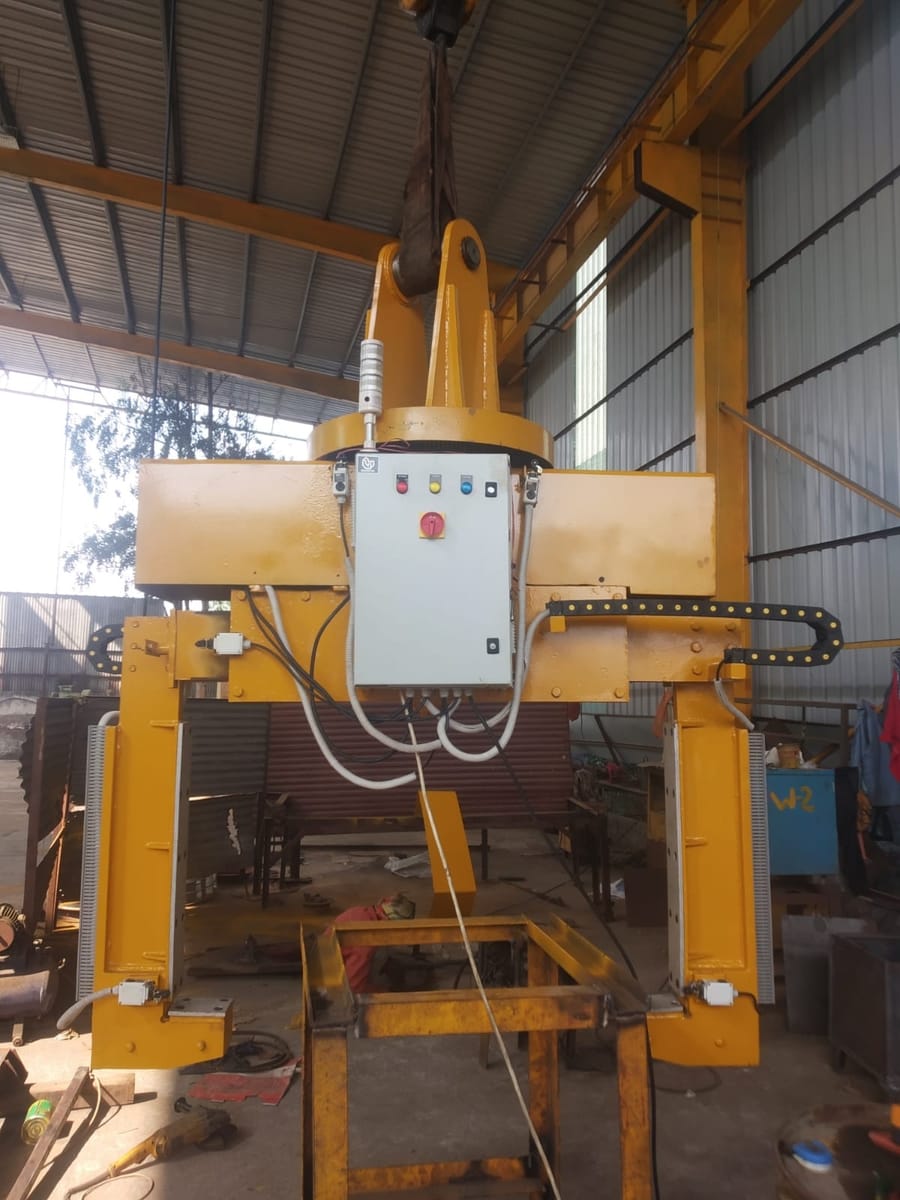
Manual, hydraulic, and motorised variants
- Manual coil tong — a mechanical linkage does the clamping; the operator controls positioning and release by hand. Lowest cost, no power supply needed, best suited to lower-cycle operations.
- Hydraulic coil tong — hydraulic cylinders drive the jaws for smoother, more consistent clamping force, useful where coil surface finish matters.
- Motorised coil tong — electrically powered jaw actuation, aimed at high-cycle lines where an operator shouldn't be manually cycling the tong dozens of times a shift.
Specifications to check before you buy
- Load capacity: up to 45 ton
- Coil OD range: 800–2000 mm, customisable to your coil sizes
- Construction: high-strength alloy steel
- Standards: ANSI/ASME B30.20
Beyond the headline capacity number, confirm the actual OD range against the smallest and largest coils you run — a tong sized only for your largest coil may not seat properly on your smallest one.
Where coil tongs are used
Coil tongs show up wherever coils move by crane: steel mill coil yards, transport vehicle loading, processing line transfers, and storage retrieval. Even load distribution across the jaws prevents the coil from deforming under its own weight, and replaceable wear pads mean the jaws themselves aren't a wear item you have to replace the whole tong for.
Coil tong vs. C hook vs. coil grab
All three are overhead crane attachments for the same basic job — lifting a coil — but they grip it differently. A coil tong clamps the OD with jaws; a C hook hangs the coil from its ID on a curved saddle; a coil grab also engages the OD, typically through a mechanical, no-power linkage. Which one fits depends on your coil's eye access, OD consistency, and how often the attachment needs to cycle in a shift — worth walking through with your equipment supplier rather than guessing from capacity numbers alone.
Interested in our industrial equipment?
Our engineering team will recommend the right solution for your plant requirements.
Request a quote