A motorised trolley moves coils and other heavy loads between fixed points — along a rail or a defined floor path — under electric power, freeing the crane for lifting work instead of point-to-point transport.
Three configurations, three jobs
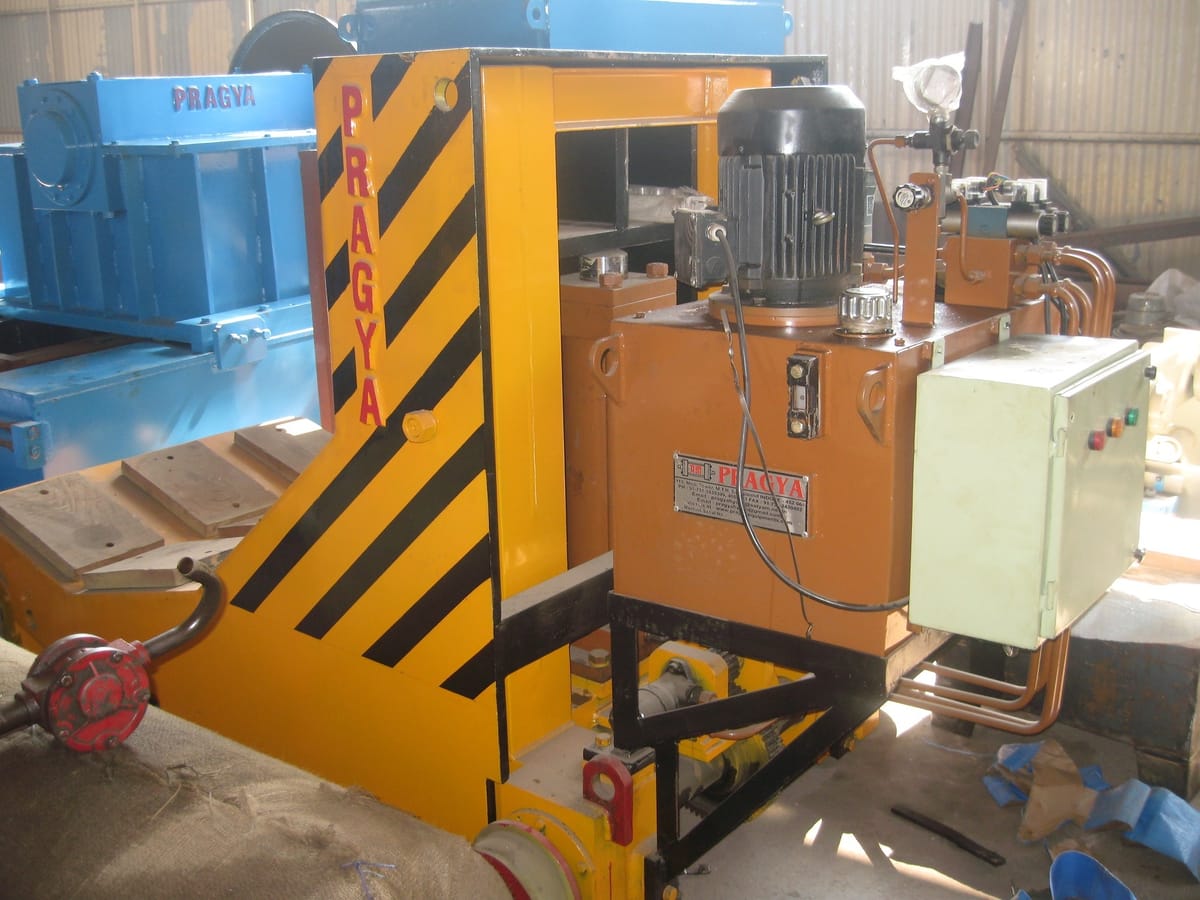
- Hydraulic tipper trolley — adds a tilting mechanism to the transfer function, so the coil can be tipped for loading or unloading without a separate handling step.
- L-type transfer trolley — an L-shaped platform gives stable coil support for straightforward floor-level transfer between stations.
- Coil transfer trolley — V-frame or U-frame construction holds the coil securely in position through the move, which matters most at higher transfer speeds.
| Configuration | Design | Best suited to |
|---|---|---|
| Hydraulic tipper trolley | Adds a tilting mechanism to the transfer function | Loading/unloading that needs the coil tipped, without a separate step |
| L-type transfer trolley | L-shaped platform | Straightforward floor-level transfer between stations |
| Coil transfer trolley | V-frame or U-frame construction | Higher transfer speeds where secure in-transit positioning matters |
Specifications to size against your line
- Load capacity: 1 to 150 ton — a wide range, so confirm the specific unit's rating against your heaviest coil, not just the category maximum
- Table size: 2000–10000 × 1500–3000 mm
- Speed: 0–25 m/min
- Power: battery, cable reel, or busbar
- Control: pendant, wireless, or AGV integration
| Specification | Value |
|---|---|
| Load capacity | 1 to 150 ton |
| Table size | 2000–10000 × 1500–3000 mm |
| Speed | 0–25 m/min |
| Power | Battery, cable reel, or busbar |
| Control | Pendant, wireless, or AGV integration |
Power supply choice matters more than it looks: a cable reel is simple and cheap but limits travel to the reel's cable length, busbar suits fixed long-run rails, and battery power gives the most routing flexibility at the cost of charging downtime to plan around.
Safety and control features
Warning alarms and emergency stop systems are standard on these trolleys given the loads involved, and variable speed control lets the operator slow down for precise spotting at the delivery point rather than running one fixed speed for the whole transfer.
Motorised trolley vs. fixed-rail alternatives
A motorised trolley suits layouts where the transfer path is long, straight, or needs flexible routing (especially with battery power). Where the transfer distance is short and fixed, alternatives like a pillar-type coil car (rail-mounted, fixed path) or a scissor-type trolley (built around a scissor-lift mechanism) can be simpler and cheaper for that specific move. The right choice usually comes down to transfer distance and how many different pickup/drop points the trolley needs to service — worth mapping your actual coil flow before specifying a table size and capacity.
Interested in our industrial equipment?
Our engineering team, based in Indore, Madhya Pradesh, India, will recommend the right solution for your plant requirements.
Request a quote