A seed cracker breaks whole oil seeds into 4-6 uniform pieces using counter-rotating corrugated rolls, preparing them for flaking and cutting downstream flaking power consumption by 20-30%. It's the first mechanical step in most solvent extraction lines, sitting right after seed cleaning and before conditioning or flaking.
Why cracking comes first
Whole seeds are too large and irregular to flake evenly. Feeding whole soybeans or sunflower seeds directly into a flaker's roll gap risks damaging the rolls and produces inconsistent flake thickness. A seed cracker solves this by running seeds between two corrugated rolls turning at different speeds — the speed differential (typically 1:1.5 to 1:2.5) creates a shearing action that splits seeds into smaller, more uniform particles rather than crushing them into powder.
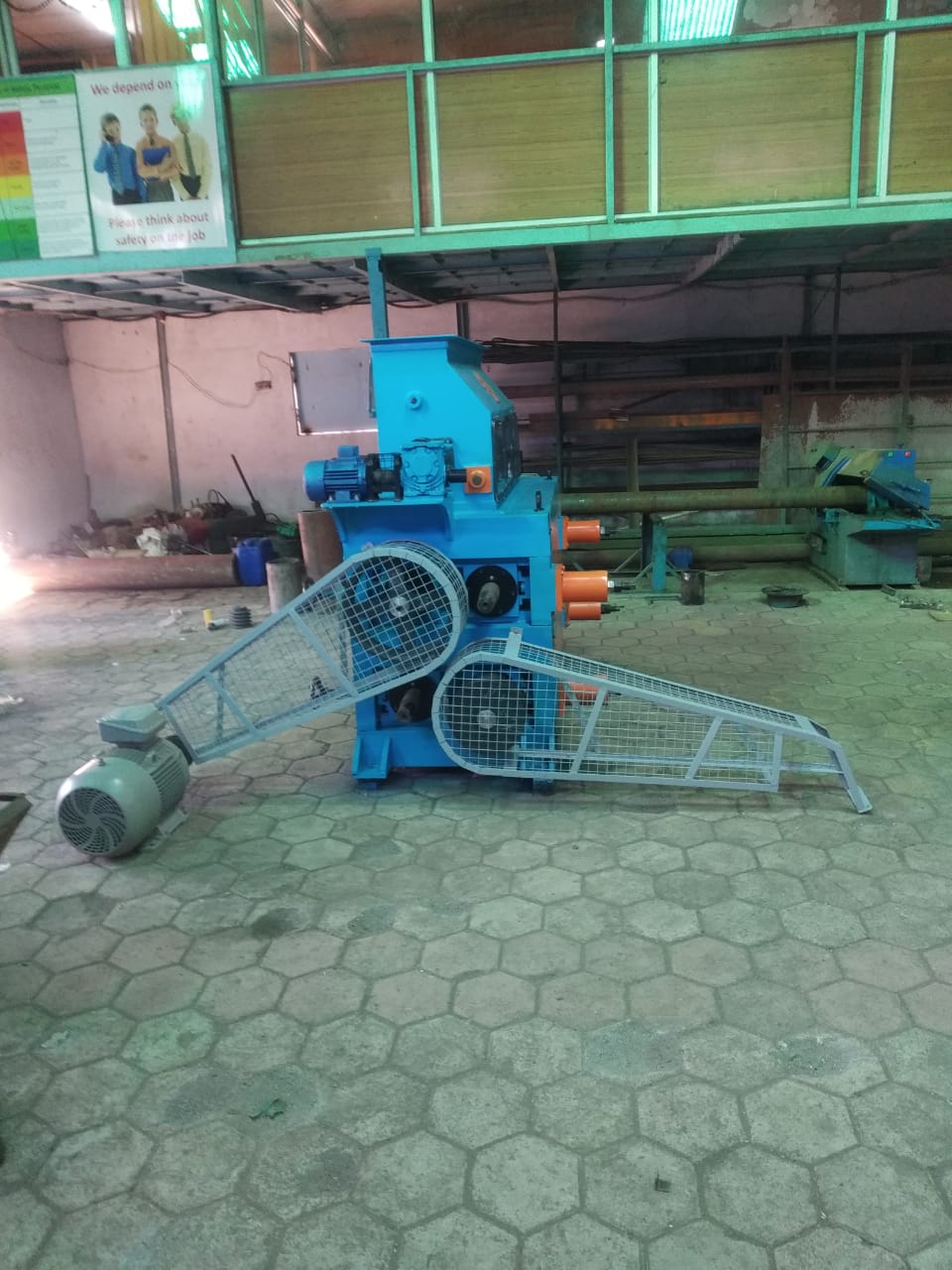
What the machine does mechanically
The counter-rotating rolls are precision-ground and hardened to HRC 55-60, which matters because seed cracking is a continuous, abrasive duty — soft rolls would wear unevenly and start producing inconsistent particle sizes within months. Hydraulic gap adjustment lets the operator dial in particle size for different seed types without swapping hardware, since sunflower seed and soybean don't crack the same way at the same gap setting.
Specifications
- Roll configuration: counter-rotating corrugated rolls
- Speed differential: 1:1.5 to 1:2.5 ratio
- Particle output: 4-6 pieces per seed
- Roll hardness: HRC 55-60 hardened surfaces
- Capacity range: 50-500 TPD
What skipping this step costs
Feeding uncracked or poorly cracked seed into a flaker forces the flaking rolls to do work they're not designed for — absorbing more power per tonne and wearing out faster from oversized material passing through the gap. Running a properly set cracker ahead of the flaker is what keeps that 20-30% power saving real, and it protects flaker roll life, which is the more expensive component to replace. For soybean, sunflower, rapeseed, canola, cottonseed, and groundnut lines, cracking is standard practice before the seed ever reaches the flaking stage.
Capacity and specifying the right machine
Seed crackers in this category run across a 50-500 TPD capacity range, which covers everything from smaller regional oil mills to higher-throughput solvent extraction plants. Because the machine sits right at the start of the line, undersizing it creates a bottleneck that limits throughput for every downstream stage — conditioning, flaking, expanding, and extraction all inherit whatever cracking capacity is set here. Matching cracker capacity to the plant's actual seed intake, rather than to current flaker or extraction capacity alone, avoids having to retrofit this stage later when throughput requirements grow.
Interested in our industrial equipment?
Our engineering team, based in Indore, Madhya Pradesh, India, will recommend the right solution for your plant requirements.
Request a quote